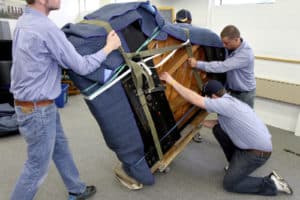

Packing for storage is not the same as packing for a move. Boxes sit stacked for weeks or months, so they need to be uniform, full and clearly labeled, and anything that can trap moisture or attract pests has to stay out. The steps below work for a self-storage unit or a moving company’s warehouse, with notes where the two differ.
Table of Contents
Decide what actually goes into storage
Start by sorting everything into three groups: store, keep with you, and let go. Storage is billed by space and by month, so every box you donate is money saved each month it would have sat there.
Keep with you anything you might need before the storage period ends: documents, medication, seasonal clothing for the coming months, chargers and tools. Getting one box back is easy at a self-storage unit and takes an appointment at most warehouses.
Get the right supplies
- New boxes in two or three standard sizes, so stacks stay stable
- Wardrobe boxes for hanging clothes
- Packing paper and bubble wrap
- Strong packing tape and a marker
- Furniture blankets or breathable covers
- Zip bags for screws and hardware
- Mattress bags
Skip grocery and liquor boxes. Mismatched sizes make crooked stacks, and used boxes can carry food residue that draws pests.
Packing boxes so they survive the stack
- Heavy items in small boxes. Books and tools go in small boxes. Linens and pillows go in large ones.
- Fill every box to the top. Empty space lets the box crush under the one above it. Fill gaps with paper or towels.
- Tape the bottom twice. Run tape across the seam and along both edges.
- Label two sides and the top. Write the room and a short list of contents. You will only see one side once it is stacked.
- Number every box. Keep a matching list on your phone. When you need the box of winter boots, you will know it is box 14.
Furniture
Take apart anything that comes apart: bed frames, table legs, shelves. Put the hardware in a labeled bag and tape it to the largest piece. Clean and dry wood before storing it.
Cover furniture with blankets or breathable covers, not plastic wrap pressed against the finish. Plastic traps moisture, and Western New York’s humid summers and freeze-thaw winters make that a real risk.
Mattresses, appliances and electronics
- Mattresses: seal in a mattress bag and store flat if you have the room.
- Fridges and freezers: defrost, clean and dry them fully, then prop the door open slightly so mildew cannot form.
- Washers: drain all water from hoses and the drum.
- Electronics: use original boxes if you kept them. Remove batteries from remotes and devices.
- Lamps: remove bulbs and shades and pack them separately.
What never goes into storage
- Food, including pet food
- Plants
- Paint, fuel, propane, cleaning chemicals and anything flammable
- Open liquids
- Cash, jewelry, passports and irreplaceable documents
Most storage facilities ban hazardous and perishable items. Our warehouse does not accept explosives, flammable liquids, chemicals, perishable food, plants or open liquids, and valuables like cash and passports are safer kept with you.
Self-storage unit vs. warehouse vault
How you pack depends on who handles the boxes.
| Self-storage unit | Warehouse vault (e.g. Wayfinder) | |
|---|---|---|
| Who loads it | You | The moving crew |
| Access | Whenever the facility is open | By appointment, with 24 to 48 hours’ notice |
| Space | A room you fill yourself | Sealed wooden vaults, typically 7 x 5 x 8 ft |
| Climate | Varies by unit, often none | Temperature and humidity controlled |
| Inventory | Your own list | Barcoded and tracked by the company |
For a self-storage unit, put a pallet or plastic sheet on the floor, load heavy furniture first along the back wall, and leave a walkway so you can reach the front of each stack. Put the boxes you might need near the door.
For a vault, the crew does the loading, so your job is the packing itself. Because access needs notice, be strict about the keep-with-you pile.
How long can things stay in storage?
Well-packed household goods can sit for years in a climate-controlled space. Unheated units are the real risk in Buffalo: winter cold can crack finishes and electronics, and summer humidity brings mildew. If the stay is longer than a season, pay for climate control. If you are storing because your closing dates do not line up, our guide to what to do with your belongings during a moving gap covers the timing.
FAQ
Should I use plastic bins or cardboard boxes?
Plastic bins resist moisture and stack well for long stays. Cardboard is fine for short stays in a climate-controlled space.
Can I store clothes in vacuum bags?
For a few months, yes. For longer, use wardrobe boxes so natural fibers can breathe.
Do I need insurance for stored items?
Check your homeowner’s or renter’s policy first, then ask the storage provider what protection it offers.
Let our crew pack and store it for you
Between homes or downsizing? Our crews can pack for you and take everything straight to our climate-controlled Buffalo storage warehouse. Request a quote or call (716) 832-6683.